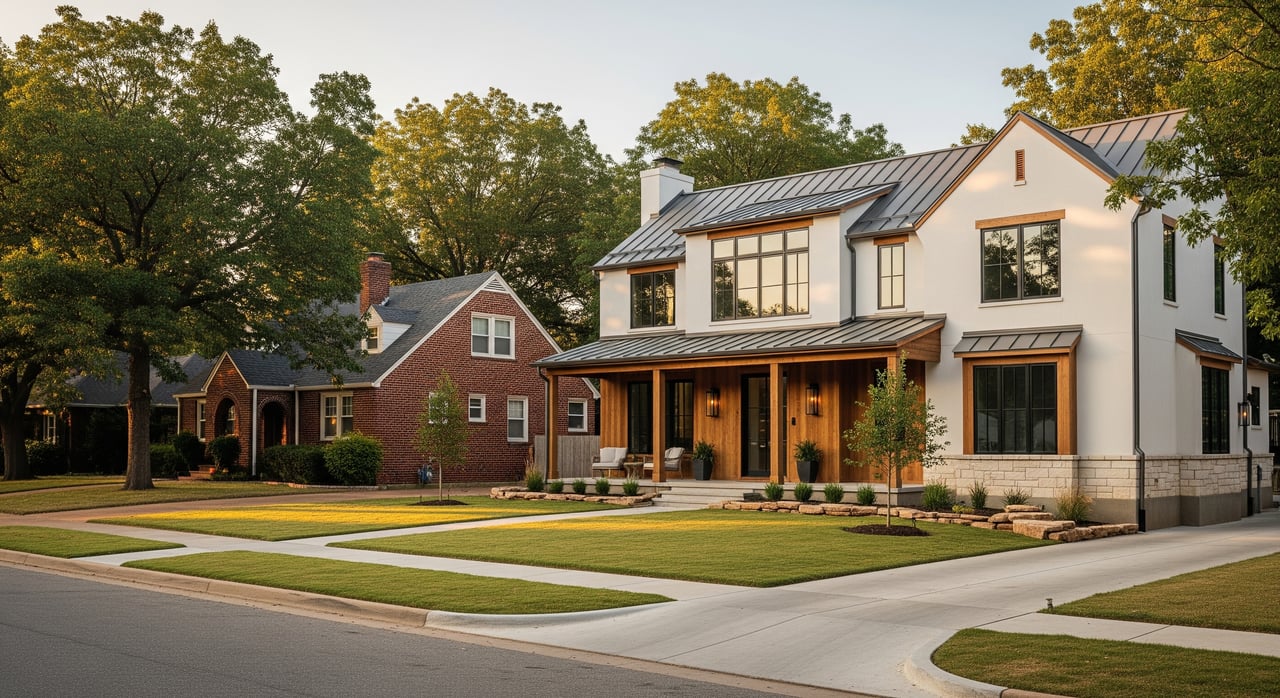
Thinking about building new or buying a resale home in Glenpool? Both paths can get you the right house, but the costs, timing, and flexibility are very different. If you want a predictable monthly payment, a smart move-in timeline, and fewer surprises, you need a clear side-by-side view of what each option really includes.
In this guide, you’ll learn how new construction and resale compare on price, upgrades, timelines, inspections, warranties, negotiation levers, and financing. You’ll also get a practical checklist and local steps to gather the exact numbers for Glenpool. Let’s dive in.
New construction vs resale: cost basics
Base price vs all-in cost
- New construction often advertises a base price that does not include the lot premium, landscaping, window coverings, fencing, or many of the finishes you see in the model. Driveways, sprinkler systems, built-in appliances, and security systems may also be extra.
- Resale homes usually include finished landscaping and standard interior finishes in the list price. You can compare to recent sales to negotiate a fair price.
- New construction can also come with soft costs such as development impact fees, utility connection fees, and some higher closing costs tied to construction financing. Resale closing costs are more familiar and can include seller credits depending on the market.
Bottom line: compare the all-in cost, not just the list price. Ask for a written line-item estimate on new builds and include every add-on that matters to your lifestyle.
Upgrade and customization costs
- Builders provide a menu of upgrades for kitchens, flooring, tile, lighting, and HVAC efficiency. These can add up quickly compared to standard inclusions.
- Expect upgrades and lot premiums to add a noticeable percentage to the advertised base price. The exact amount varies by builder and subdivision.
- Ask for the full upgrade price list, a lot premium range, and a worksheet that shows how your choices affect your mortgage amount and property tax basis.
Ongoing ownership costs
- Property taxes: New construction may be reassessed after completion. Contact the Tulsa County Assessor to learn how timing works and how your all-in price affects assessed value.
- Insurance: Replacement-cost coverage for newer homes can sometimes be more favorable, but rates vary by carrier and location. Request quotes for both a new build and a comparable resale.
- Utilities and maintenance: New homes often have lower early maintenance and potentially lower energy costs if built to modern codes. Ask the builder for utility estimates, then compare to recent utility bills from a resale seller.
Timeline differences in Glenpool
New build timeline at a glance
- If you buy a spec home, you may close much faster than a custom or build-to-order home. If you build, timelines often range from a few months to a year depending on design choices, weather, labor, and material availability.
- Expect key milestones like foundation, pre-drywall, and final municipal inspections. Your closing usually follows the certificate of occupancy and punch-list completion.
- Schedules can shift. Ask the builder for recent examples of completion timelines and what typically causes delays.
Resale timeline at a glance
- Once your offer is accepted, closings typically occur in about 30 to 45 days depending on financing, title, and inspection timelines.
- If you need to move quickly, resale is often the faster path. If you need more time to move, you can negotiate occupancy terms with the seller.
Coordinating a sale and purchase
- For move-up buyers, timing is everything. Bridge financing, seller rent-back, or a sale contingency can keep you from moving twice.
- If you build new, consider how rate changes and completion timing might affect your current home sale. Your lender can model scenarios to reduce risk.
Inspections and quality control
Resale inspection plan
- Order a full home inspection that covers structure, roof, electrical, plumbing, HVAC, and interiors.
- Add specialists as needed. Common add-ons include sewer scope, termite or pest, radon, chimney, or pool inspections.
New-build inspections that matter
- Even new construction benefits from independent inspections. Organizations like the American Society of Home Inspectors recommend a pre-drywall inspection and a final inspection before closing.
- The pre-drywall inspection is critical because it is your best chance to catch framing, insulation, or mechanical routing issues while they are visible.
- Follow with a thorough final inspection and one or more walkthroughs to build a documented punch list.
City permits and municipal checks
- The City of Glenpool manages permits and municipal inspections. Ask your builder which city inspections apply to your home and at what stages.
- Confirm that independent inspections are allowed and when they can occur without impacting schedule.
Warranties and post-closing support
Typical builder warranty pattern
- Many builders offer a 1-year limited warranty covering workmanship and materials.
- Some provide 2-year coverage on major systems like electrical, mechanical, and plumbing.
- Structural coverage may extend to 10 years. Terms vary widely by builder and whether the warranty is backed by a third party.
How to use your warranty
- Request the full warranty document in writing before signing a contract. Confirm the start date and any exclusions.
- Ask how the builder handles warranty requests, what response times you can expect, and whether repairs are documented.
- Keep detailed records and use your warranty proactively during covered periods.
Negotiation and financing
What builders negotiate
- Builders may have limited flexibility on base price, especially in competitive phases of a community. However, they often offer incentives like rate buydowns, closing cost credits, upgraded appliances, or option discounts.
- Timing matters. End-of-quarter inventory or completed spec homes can open the door to stronger concessions.
- If a preferred lender is promoted, compare that offer to independent lenders to ensure the incentive is truly beneficial.
What resale sellers negotiate
- Price, repairs, and credits depend on market conditions such as inventory and days on market. A strong inspection report can be a powerful lever for repairs or concessions.
- You can also request a home warranty or specific repairs before closing.
Financing paths and rate risk
- Resale purchases usually use conventional, FHA, VA, or USDA loans, plus potential down payment assistance programs.
- New construction can involve a construction-to-permanent loan, a two-close construction loan, or a builder’s preferred lender program. Each option has different requirements for down payments and reserves.
- Rate exposure is a factor. If you build over several months, your rate may change before you lock a permanent loan. Some single-close options can reduce this risk.
- FHA and VA programs may apply to new construction under specific conditions. Confirm eligibility and documentation requirements with your lender.
Quick comparison table
| Topic | New Construction | Resale |
|---|---|---|
| Cost visibility | Base price often excludes lot premium and many finishes; all-in quote is essential | Most costs included in list price; visible comps help with pricing |
| Upgrades | High customization with upgrade menus; costs can add quickly | Fewer changes upfront; remodels can be phased later |
| Timeline | Spec can be fast, build-to-order takes months; schedules can shift | Typically 30–45 days after offer acceptance |
| Inspections | Pre-drywall and final independent inspections strongly recommended | Full home inspection plus specialists as needed |
| Warranties | Common pattern: 1-year workmanship, 2-year systems, 10-year structural | Varies; may include seller-paid warranty or none |
| Negotiation | Incentives, closing costs, or upgrades are common | Price, repairs, credits driven by market conditions |
| Financing | Construction or single-close options; rate risk during build | Standard mortgage programs with known timelines |
| Ideal fit | You want personalization and newer systems | You want established areas and quicker move-in |
How to get true local numbers
Use these steps to build an apples-to-apples comparison for Glenpool:
- Pull recent Glenpool resale metrics from the Greater Tulsa Association of REALTORS or local MLS. Compare to active new-build pricing to see the current gap.
- Request full estimate packets from at least two Glenpool-area builders. Include base price, lot premium, standard features, upgrade price list, landscaping, driveway, fencing, appliance packages, HOA dues, and any connection fees.
- Ask the City of Glenpool Building Department about permit timelines and common impact or connection fees that affect costs and schedules.
- Call the Tulsa County Assessor for how and when new construction is assessed, then request an estimated annual tax based on your all-in price.
- Get two lender scenarios: one for a new build at your chosen upgrade level and one for a comparable resale. Include principal, interest, taxes, insurance, HOA, and estimated utilities.
Decision checklist you can use
Use this list to compare your top two or three options.
- Financial
- All-in new-build estimate with upgrades and lot premium in writing.
- Comparable resale estimate with expected repairs and any remodel budget.
- Two lender quotes showing monthly payment, cash to close, and rate-lock details.
- Property tax estimate from Tulsa County for each home.
- Timeline
- Required move date and flexibility window.
- Builder’s estimated completion date plus typical delay factors.
- Plan for sale-contingency, bridge financing, or rent-back if you are selling first.
- Quality and inspections
- Independent inspector lined up for pre-drywall and final on new builds.
- Full inspection plan and specialist add-ons for resale.
- Builder’s written warranty document and punch-list process.
- Resale-specific items
- Seller disclosures and any recent inspection reports.
- Recent utility bills for comparison.
- Negotiated repairs versus credits documented in writing.
Model-home and builder interview tips
- Before the visit
- Bring the builder’s inclusions sheet and a checklist.
- Ask for a redacted purchase agreement and a sample closing-cost worksheet from a recent sale.
- During the tour
- Label features as standard or upgrade and get upgrade pricing in writing.
- Look closely at workmanship: cabinet alignment, trim joints, grout and caulk lines, door hardware, and floor transitions.
- Ask about HVAC size and efficiency, insulation type and R-values, and window performance ratings.
- Request warranty response times and examples of recent warranty resolutions.
- Ask for recent buyer references if available.
- Red flags
- Vague answers on upgrade pricing, warranty terms, or inspection history.
- A model packed with upgrades while marketing focuses on base price.
- Poor site management in active builds.
- After the visit
- Request a written timeline with milestones and change-order policies.
- Ask for a sample final Closing Disclosure from a recent closed home.
- Confirm whether incentives require a specific lender or title company.
Which choice fits your goals
Choose new construction if you want personalization, newer systems, potentially lower early maintenance, and you can be flexible on timing. Be prepared to manage upgrade decisions and to budget for items not included in the base price.
Choose resale if you want a quicker move-in, established landscaping and surroundings, and more room to negotiate on price or repairs. Plan for inspection findings and potential updates over time.
If you are a move-up buyer, weigh certainty against customization. A resale with a predictable 30 to 45 day close can simplify the timing with your current home. A new build can deliver the layout you want if you have time to coordinate financing and a sale strategy.
Ready to compare options in Glenpool?
You deserve a side-by-side with real numbers tailored to your timeline and budget. If you want help gathering builder quotes, MLS comparables, and lender scenarios, reach out to Heidi Ewing for personal guidance and a clear next step.
FAQs
What costs are often excluded from a new-build base price in Glenpool?
- Lot premiums, landscaping, fencing, driveway finishes, window coverings, built-in appliances, sprinkler systems, and some lighting or HVAC upgrades are commonly extra.
How long does a new home in Glenpool typically take compared to buying resale?
- Spec homes can close sooner, while build-to-order homes often take months; resale closings commonly occur in about 30 to 45 days after offer acceptance.
Do you need a home inspection on new construction in Glenpool?
- Yes. A pre-drywall inspection and a final independent inspection are strongly recommended to catch issues before closing and to document punch-list items.
How do builder warranties usually work in Oklahoma new construction?
- Many builders provide a 1-year workmanship warranty, 2-year systems coverage, and a structural warranty that can extend to 10 years; always verify terms in writing.
What financing should you consider for a new build vs resale in Glenpool?
- Resale often uses conventional, FHA, VA, or USDA loans; new construction may use construction-to-permanent or two-close loans, plus potential builder-lender incentives.