Dreaming about Grand Lake living, but not sure whether you need a home on the water or just near it? That is one of the biggest decisions buyers face in Grand Lake Towne, especially when both options can deliver a great lake lifestyle in very different ways. If you are weighing budget, convenience, maintenance, and how often you will actually use the lake, this guide will help you sort through the tradeoffs with confidence. Let’s dive in.
Why this choice matters in Grand Lake Towne
Grand Lake Towne is a small lakeside community built around a relaxed, small-town setting. The community highlights its own dock and boat ramp, and the wider Grand Lake area is known for boating, fishing, swimming, water skiing, and wildlife viewing.
That means your decision is not simply about whether you can enjoy the lake. In many cases, the real question is how close you need to be to the water to get the lifestyle you want.
Grand Lake price ranges vary widely
Because Grand Lake Towne is a very small market, it does not always show a stable local median home price. Nearby lake-area ZIP code benchmarks help provide context, with reported prices around $242,450 in 74301, $399,900 in 74331, and $412,000 in 74342.
Current nearby listings also show a wide spread. General homes within about 3 miles have included examples from roughly $219,000 to $495,000, while waterfront listings have ranged from about $195,000 to more than $2 million.
The takeaway is simple: waterfront is not one single price point. You may find options across a broad budget range, but direct frontage often brings a premium that should be weighed against the way you plan to use the lake.
What waterfront ownership gives you
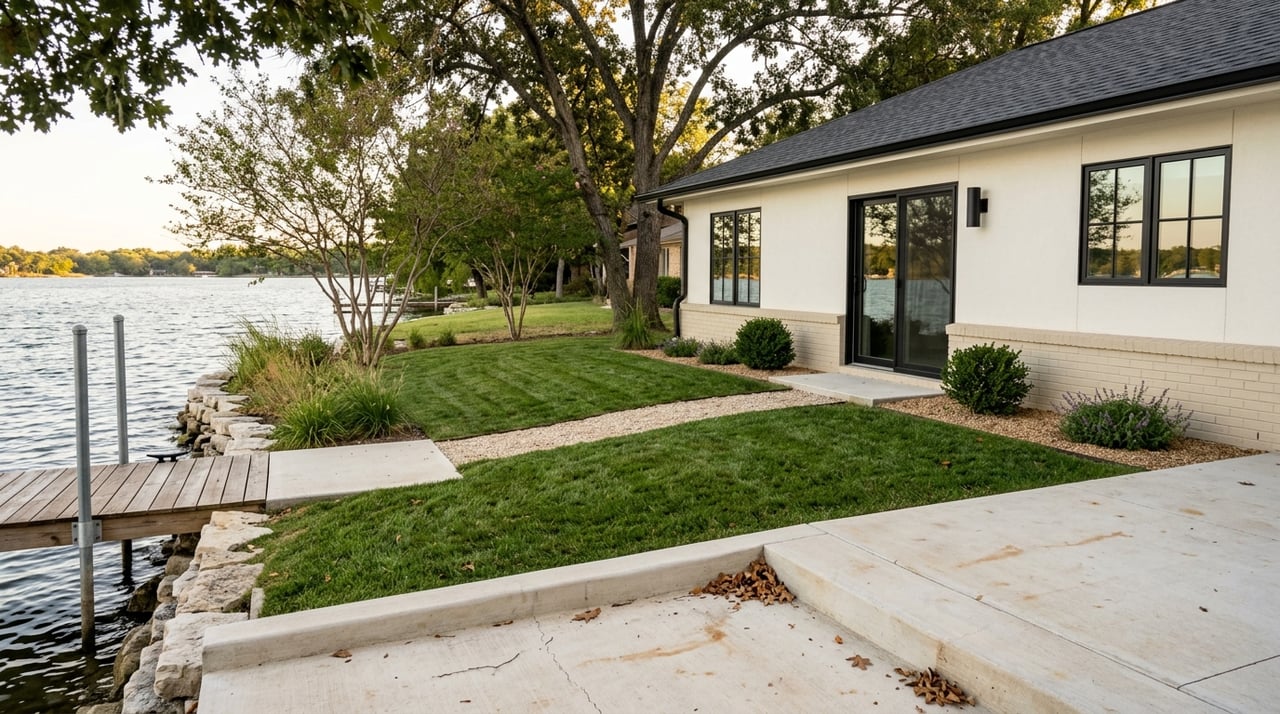
The biggest benefit of a waterfront home is convenience. You can step outside for boating, fishing, swimming, or dock time without packing up the car or towing a boat to a launch.
For buyers who plan to be on the lake often, that ease can be a major quality-of-life upgrade. If the lake is central to your routine, direct access may be the feature that makes the home worth it.
Waterfront means direct access
A waterfront property can make spontaneous lake use much easier. If your ideal day includes early fishing, sunset boating, or simply sitting near the shoreline, living on the water removes extra steps.
That kind of access tends to matter most if you expect to use it regularly. The more often you picture yourself on the water, the stronger the case for waterfront becomes.
Waterfront may include dock potential
Some buyers also want the ability to keep a boat close to home. On Grand Lake, that depends on whether the property can support a permitted dock and whether the necessary approvals are in place.
This is an important detail, because owning shoreline does not automatically mean you can add or change a dock however you want. Grand River Dam Authority, or GRDA, regulates docks closely on Grand Lake.
What waterfront ownership requires
Waterfront living offers convenience, but it also comes with more responsibility. On Grand Lake, the added work is not just general home maintenance. It can also include permits, shoreline care, dock upkeep, and planning around water-level changes.
For some buyers, that is a fair trade. For others, it can be more work than they want from a weekend or seasonal property.
Dock rules are important on Grand Lake
GRDA states that a dock may not be installed until the owner receives written approval. Private docks require permits, and no dock may extend more than one-third of a cove.
GRDA also notes that insurance may be required for permitted activities. In addition, habitable structures and dock-o-miniums are prohibited on GRDA waters.
Shoreline work can require approval
If you own waterfront, changes to the shoreline may not be simple weekend projects. GRDA notes that shoreline stabilization, retaining walls, dredging, and similar work generally require permits.
Some projects may also require approval from other agencies. That makes it especially important to understand the property’s condition and what future improvements may involve before you buy.
Maintenance is a real part of the cost
Dock and shoreline maintenance matter for both property value and water quality. GRDA’s dock maintenance guidance also recommends careful electrical inspection and caution with sealants.
Water levels can vary over time because Grand Lake is a flood-control and hydroelectric reservoir. That variation matters most when you own a dock or shoreline, since it can affect access, maintenance, and long-term planning.
What off-water homes can offer
If you love Grand Lake but do not need to live directly on the shoreline, off-water homes can be a very smart option. They often offer a simpler ownership experience and a broader range of traditional home styles.
Nearby non-waterfront listings also suggest lower entry points in many cases. That can leave more room in your budget for the house itself, updates, furnishings, or boating costs.
Off-water can stretch your budget
When you skip direct frontage, you may be able to focus more on square footage, lot size, layout, or overall home condition. That can be especially helpful if you want a comfortable full-time home, a second home with lower carrying costs, or a property that feels easier to maintain.
For many buyers, the better question is not, “Can I afford waterfront?” It is, “Will I use waterfront enough to justify what I give up elsewhere?”
Off-water usually means less complexity
Without shoreline and dock responsibilities, ownership can feel more straightforward. You may avoid some of the permitting, erosion concerns, and ongoing dock upkeep that come with direct water frontage.
That simplicity appeals to many buyers who want lake access without adding another layer of maintenance. It can also be a practical fit for weekend users and seasonal owners.
Off-water does not mean giving up lake life
One of the best things about Grand Lake Towne is that lake access is still part of the lifestyle even if your home is not directly on the water. The town highlights a dock and boat ramp on its community site, which supports day-to-day access for residents and visitors.
The wider area also offers several public access points. Cherokee Area at Grand Lake State Park includes a lighted boat ramp, and Twin Bridges offers lighted ramps, picnic areas, campgrounds, and lake huts. The Disney Area also has a public boat ramp near Pensacola Dam.
Marinas can fill the gap
If you do not need a private dock, marinas can be a useful middle ground. Grand Lake amenities include options such as Marina Del Rey Resort, which offers a marina, day slips, docks, special events, and cabin rentals with a boat slip.
Lee’s Grand Lake Resort offers a boat launch, covered slips, boat rentals, marine gas, and a mini-mart. Around the lake, marina services and dining options also help support an easy, flexible lake routine.
Public water access supports flexibility
GRDA states that the public has free access to the waters of the lakes for hunting, fishing, swimming, and non-commercial boating. That means you can still enjoy a very active lake lifestyle without owning the shoreline itself.
For many second-home buyers, that is a big advantage. If you expect to visit on weekends or seasonally, off-water plus a marina slip or public ramp may deliver most of the experience with fewer ownership demands.
How to decide which fits you best
A simple way to make the choice is to match the property type to your real habits, not your idealized ones. It helps to think honestly about how often you will use the lake, how much maintenance you want, and what matters most in your budget.
If you are still torn, start with these practical filters.
Choose waterfront if
- You expect boating, fishing, or swimming to be a regular part of your routine
- You want the fastest possible access to the water
- You are comfortable with dock permits, shoreline rules, and added upkeep
- You understand that water levels can vary over time
Choose off-water if
- You want a lower entry price in many cases
- You prefer simpler maintenance
- You are comfortable using a boat ramp or marina slip
- You expect more occasional weekend or seasonal lake use
Think about your lifestyle first
The right answer usually comes down to frequency. If you plan to use the lake only a few times a month, an off-water home may give you plenty of value while keeping ownership simpler.
If you expect frequent boating, fishing, and dock time, the waterfront premium may be easier to justify. In that case, convenience is not just a luxury feature. It becomes part of how you live.
A smart Grand Lake strategy
In Grand Lake Towne, both waterfront and off-water homes can make sense. Waterfront tends to fit buyers who want direct access and are ready for the rules and maintenance that come with shoreline ownership, while off-water often works well for buyers who want flexibility, value, and a simpler path to enjoying the lake.
If you want help comparing specific homes, neighborhoods, and access options around Grand Lake Towne, reach out to Heidi Ewing. You will get practical, local guidance to help you find the lake property that fits the way you actually want to live.
FAQs
What is the main benefit of a waterfront home in Grand Lake Towne?
- The main benefit of a waterfront home in Grand Lake Towne is convenience, especially if you want direct access for boating, fishing, swimming, or spending time at the dock.
What should buyers know about docks on Grand Lake?
- Buyers should know that GRDA regulates docks on Grand Lake, and written approval and permits are required before installing a private dock.
Are off-water homes near Grand Lake Towne still good for lake living?
- Yes, off-water homes can still work well for lake living because Grand Lake Towne has a dock and boat ramp, and the area includes public ramps, parks, and marina options.
Is waterfront ownership on Grand Lake more expensive to maintain?
- Waterfront ownership can involve more maintenance because docks, shorelines, and certain property changes may require ongoing care, inspections, and permits.
Who should consider an off-water home near Grand Lake Towne?
- Buyers who want a simpler ownership experience, a lower entry price in many cases, or only expect weekend or seasonal lake use should strongly consider an off-water home.