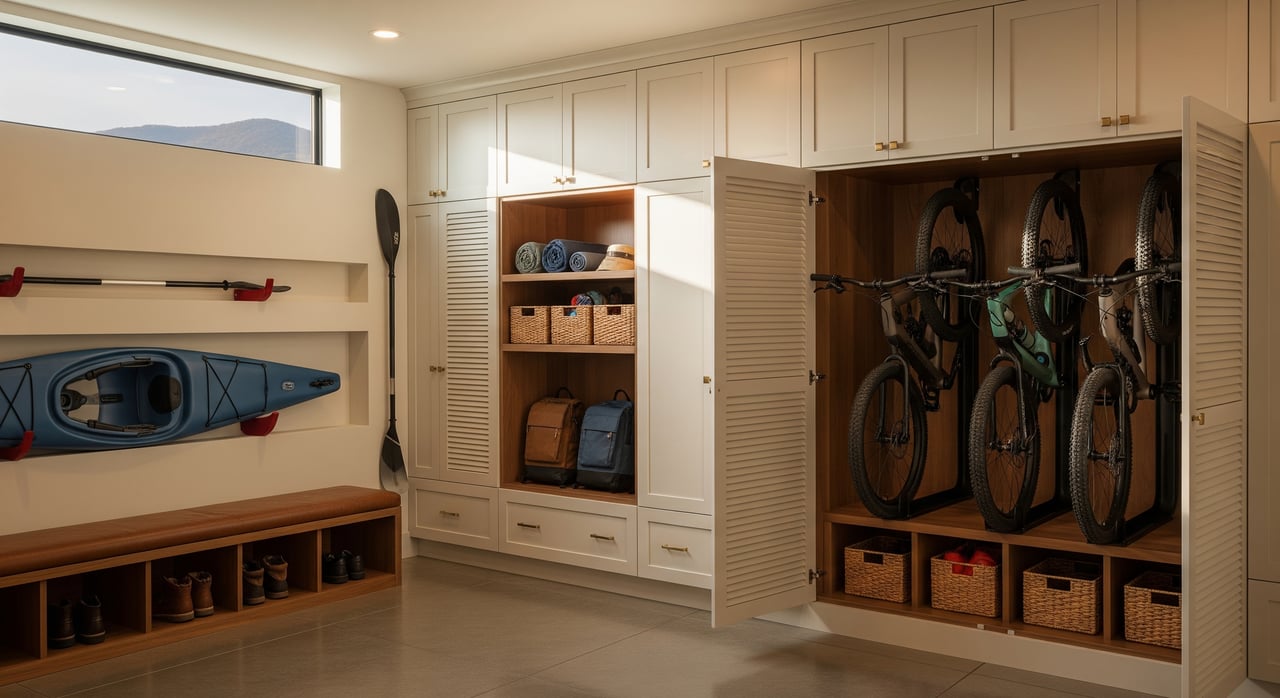
Your bikes, kayaks, and camping bins are part of the Bentonville lifestyle, but your HOA may not love seeing them in the driveway. You want quick access to gear without risking fines or clutter. In this guide, you’ll learn HOA‑friendly ways to store outdoor gear, how to navigate approvals, and how to protect equipment from humidity. Let’s dive in.
Why storage in Bentonville matters
Bentonville sits on a growing network of trails, including the Razorback Regional Greenway, so bikes and paddlesports gear are common at home. The climate brings warm, humid summers and mild to cold winters, which raises mold and corrosion risks if gear is stored damp or in unventilated spaces. Local humidity averages support using breathable storage and climate control where possible, especially for sensitive items. See Bentonville’s climate overview for context from timeanddate.com.
Know the rules first
Check your recorded covenants
In Arkansas, restrictive covenants are only effective if they are signed and recorded. Start by reading the CC&Rs linked to your deed, then any HOA rules and architectural guidelines. You can review the recordation rule at Arkansas Code § 18‑12‑103.
Confirm permits and setbacks
If you plan a shed or storage cabinet, confirm if your home is inside Bentonville city limits or unincorporated Benton County. Inside city limits, see Bentonville Development Services and accessory structure submittals at Residential Applications. In unincorporated areas, check Benton County Building Safety for current guidance.
Prepare a strong ACC packet
Most HOAs want a simple packet: site plan, dimensions and height, materials and colors, and where the structure sits on the lot. Submitting clear photos and samples often reduces back‑and‑forth. A local subdivision example that references ACC approvals is the Wildwood POA’s welcome page at wildwoodnwa.com.
On‑property storage HOAs tend to like
Make the garage work
Maximize vertical and overhead space so gear is out of public view.
- Wall‑mount bike racks, vertical hooks, or multi‑bike rails
- Ceiling hoists for kayaks or paddleboards
- Slatwall or pegboard for helmets, packs, and tools
- Labeled bins on sturdy shelves for camping items Before you store, clean and fully dry soft goods to prevent mildew. REI’s expert guide has useful basics on cleaning and storage care: end‑of‑season gear care.
Convert a closet or mudroom
Turn a hall closet or mudroom into a mini gear room. Add adjustable shelves, a boot tray, and a small fan or vent to help items dry. Use breathable bags for sleeping bags and puffy jackets.
Discreet backyard shed or cabinet
If allowed by your CC&Rs, choose a low‑profile shed or cabinet that matches your home’s materials and color. Place it behind fencing and within setback rules. For permits and submittal steps, review Bentonville’s Residential Applications.
Visible ideas that can win approval
Side‑yard screens
Hide a kayak rack or compact cabinet behind evergreen plantings, lattice, or a custom wood screen. Provide your ACC with samples to show the low visual impact.
Patio storage benches
Lockable benches or deck boxes that match your porch style keep small gear out of sight. They work well for helmets, pads, and bike shoes.
Seasonal, portable options
Portable sheds or roll‑away cabinets can be compliant if used short term and stored out of view. Check your CC&Rs so a “temporary” fix does not become a violation.
Off‑site storage to avoid conflicts
Climate control for sensitive gear
Climate‑controlled units protect down sleeping bags, tents, and electronics from Bentonville’s summer humidity. Local availability is strong, including options like StrongPoint Self Storage in Bentonville. Off‑site storage also frees the garage for everyday access.
Storage for oversized items
If your HOA bans trailers, RVs, or visible kayaks, use dedicated RV or boat storage. This keeps large items accessible without triggering enforcement.
Protect your gear from humidity
- Clean and dry everything before storage. Focus on tents, sleeping bags, boots, and PFDs to prevent mildew.
- Use breathable storage for soft goods. Avoid long‑term compression of down.
- Protect metal parts. Lube bike chains and dry contacts, then remove e‑bike batteries for long storage. See safe storage basics in this consumer guide from Reviewed.
- Keep pests out. Elevate bins on shelves, seal lids, and do seasonal checks.
- Control moisture. Use desiccant packs in sealed boxes and consider a small dehumidifier in enclosed garages during humid months.
Quick compliance checklist
- List your gear and where you want it stored. Note what is visible from the street.
- Read your deed and CC&Rs first, then any HOA rules and ACC guidelines.
- If a structure is involved, confirm city or county permit needs before you buy anything.
- Prepare an ACC packet with a site plan, dimensions, materials, and color samples.
- Place any visible storage behind fencing or landscaping to reduce visual impact.
- If approval is denied, pivot to garage solutions or a climate‑controlled unit.
A little planning goes a long way. With the right setup, you can keep your Bentonville gear ready to roll while staying on great terms with your HOA. If you are prepping a move or want advice on what today’s buyers expect in storage and organization, connect with Heidi Ewing for friendly, local guidance.
FAQs
What storage do Bentonville HOAs usually allow?
- Most allow neat, out‑of‑view solutions such as garage wall racks, ceiling hoists, and discreet backyard cabinets or sheds that match the home and sit behind fencing, subject to CC&Rs and approvals.
Do I need a permit for a small shed in Bentonville?
- It depends on size, location, and jurisdiction. Confirm if you are inside city limits or in unincorporated Benton County, then ask the city or county about accessory structure requirements before you build.
How can I store an e‑bike safely at home?
- Remove the battery for long storage, keep it in a cool, dry place, and lube metal parts. Store the bike indoors or in a dry, ventilated space and secure it with a quality lock.
What if my HOA bans visible gear altogether?
- Use garage‑based storage first, then consider a small interior closet conversion or an off‑site climate‑controlled unit to keep gear protected and compliant.
Will a storage bench on my porch pass ACC review?
- It can if it is lockable, sized to the space, and matches the porch style. Provide photos and materials in your ACC packet to improve approval odds.
How do I avoid mold on tents and sleeping bags in Bentonville’s humidity?
- Clean and fully dry items, store them loosely in breathable bags, and use desiccants or light ventilation where possible. Climate‑controlled storage is best for long off‑season periods.